
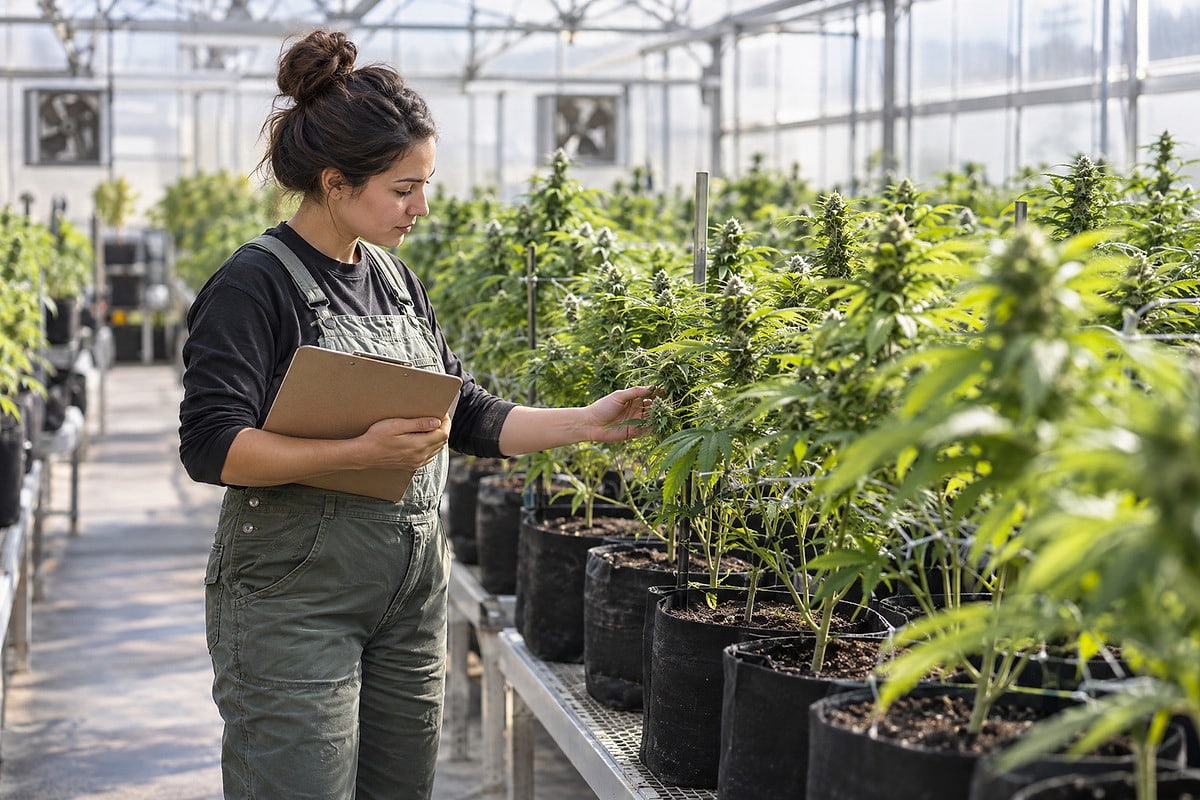
California is moving toward group tagging for cultivation plants. The Department of Cannabis Control's proposed rule, DCC-2026-03-R, would end the requirement to tag each cannabis plant individually and set rules for tagging plants as a group. Public comments on the latest modified text closed on October 2, 2026, and DCC has not yet adopted the rule. For cultivators, the workflow would change, and the track-and-trace system has to change with it. DCC's rulemaking page for the proposal tracks each step.
What DCC has proposed and when
DCC published its notice of proposed rulemaking on June 12, 2026, and held a public hearing on July 28. On September 17, it issued a notice of modifications and opened a new comment period that ran through October 2.
The proposal also updates definitions to reflect Senate Bill 622 and Assembly Bill 8. SB 622 removed the requirement that a tag be physically attached to the base of each plant. AB 8 removed the requirement that each plant have its own unique identifier. The proposal would also drop the requirement to order tags by a specific date after licensure and give licensees seven calendar days after receipt to record new tags in the track-and-trace system.
Mature plants get their own pathway
The modified text ties plant tags to how plants are tracked in the system. DCC says the track-and-trace system will keep its existing pathways for immature plant groups and individually tagged plants, and it will add a new pathway for mature plant groups. The department's stated reason is speed: keeping existing functions and adding one new pathway means less development and testing, so group tagging can launch sooner. DCC's June notice estimated the one-time track-and-trace system update for group tagging at about $1.12 million, absorbed within existing allocations.
The flowering transition is where most cultivators will need to pay attention. Moving an immature plant into a designated canopy area before it flowers does not, by itself, require a new plant tag. When plants in an immature group already in the canopy begin flowering, the licensee may tag each mature plant individually, assign one mature group tag to the whole immature group, or split the group into one or more mature groups, each meeting the group rules. Plants that have not started flowering can stay in the existing immature group.
Changes that affect records
DCC removed a proposed requirement that all plants in a group share one strain or cultivar. The department said it did not intend to impose that requirement, but several commenters read it that way. Strain or cultivar reporting remains optional, and licensees can keep that data in the system or elsewhere.
DCC also decided not to write specific tag types into the regulation. Its track-and-trace system designee will assign the tag types, and DCC plans to communicate which tags apply through guidance. That gives the department room to adjust when systems change. It also means the rule text will not answer every question about which tag to order, so guidance will matter.
The modified text also sets two recording requirements, each with a three-calendar-day window. Licensees would record any move of a plant or plant group to another location on the premises, and any new plant tag assigned at the flowering transition. When a group is both moved and retagged, both entries would be required.
Group tags still depend on clean records
DCC says group tagging would reduce labor costs and environmental harm. The notice describes plant tags as one-time-use, with electronic chips that cannot easily be separated from the rest of the tag, so they are treated as non-recyclable e-waste. DCC estimates the average licensed cultivator would save about $2,000 a year in labor and spend about $70 a year on tagging and demarcation materials.
Efficiency does not remove oversight. DCC says inspectors will still be able to confirm that the number of plants onsite matches what licensees record in track-and-trace. In practice, the work shifts from tagging each plant to keeping group counts, moves, and growth-stage transitions accurate. Review your current canopy layout and move logs with that in mind. Group counts that drift from the physical canopy are easier to catch in a routine walk-through than during an inspection.
Do not confuse this with DCC-2026-02-R, a separate track-and-trace rulemaking covering transfer approvals, data-entry requirements, retail tax information, and certificate of analysis access. That proposal has its own timeline and its own compliance steps.
What to do now
- Map your current plant tagging workflow, from tag receipt through canopy moves and the flowering transition.
- Identify which canopy areas hold immature and mature plants today, and how plants move between them.
- Confirm your track-and-trace users know how group records are created, moved, and reconciled, so the change does not surprise staff.
- Watch DCC's rulemaking page for the final text and any guidance on plant tag types, and schedule an SOP update once the rule is adopted.
If you want help preparing your cultivation records for the change, book a consultation or call (209) 636-4856.
Sources
- DCC-2026-03-R: Group Tagging of Cannabis Plants — California Department of Cannabis Control
- Notice of Proposed Rulemaking Action, Group Tagging of Cannabis Plants — California Department of Cannabis Control, 2026-06-12
- Notice of Modifications to Proposed Regulation Text, Group Tagging — California Department of Cannabis Control, 2026-09-17
This article provides general educational information and does not constitute legal advice. Consult qualified counsel regarding specific facts or jurisdictional requirements.